
Natural Treatment Revealed:
“How to Stop Bleeding Gums Immediately”
You’re not alone. 73% of people struggle with this problem, but no one talks about it. A Harvard-backed study released a natural method to end bleeding gums. "If you are wondering how to stop bleeding gums, you are not alone. Many people face this issue while brushing..."
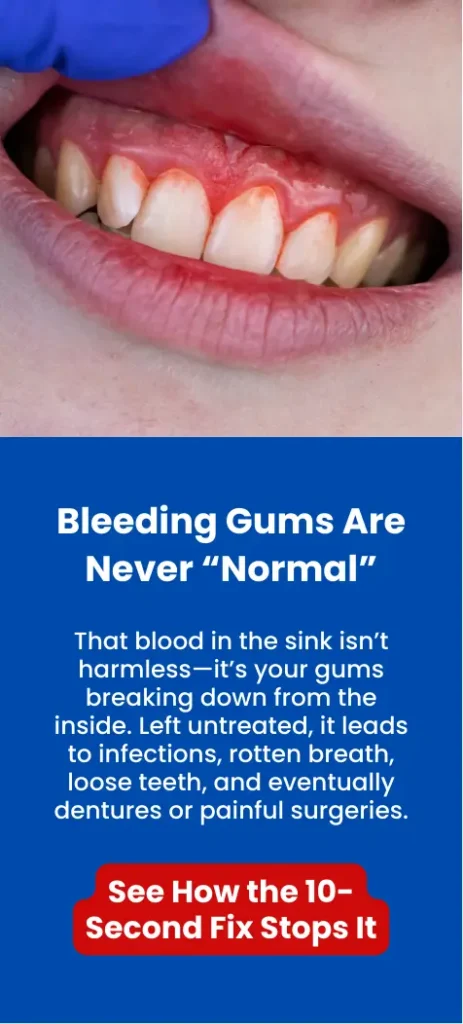
Do your gums bleed when you brush or floss?
That’s not “normal.” It’s the earliest sign of a hidden disease silently spreading inside your mouth.
If you notice 3 or more of these symptoms, pay close attention:
- Bleeding when brushing or flossing
- Swollen, red, or tender gums
- Metallic taste in your mouth
- Teeth starting to feel loose
- Bad breath that never goes away
Millions of adults face these same warning signs—but few realize how quickly gums can collapse once the bleeding begins.
The Silent Epidemic in Your Gums… And the Breakthrough Dentists Ignore
Nearly 47% of adults over 30 have gum disease, and 1 in 3 suffer from bad breath. Dentists see it every day—yet they keep telling you to “brush more and rinse harder.” "If you are wondering how to stop bleeding gums, you are not alone. Many people face this issue while brushing..."
The shocking truth? Gum disease doesn’t start with bad bacteria—it starts when toothpaste and mouthwash kill the good bacteria that protect your gums.
In the video below, discover the 10-second morning ritual that restores your good bacteria and protects your teeth for good.
From Bleeding Gums to a Perfect Smile

Samuel, 54 years
Father and Grandfather
"Not long ago, I felt like my life was falling apart."
Every morning, my gums bled. My teeth were loose. There was always a metallic taste of blood in my mouth. And my breath… it was so bad that my wife stopped kissing me. My friends pulled away. I was even ashamed to smile.
Eating became torture—I lived on mushy foods, afraid of choking. Nights were sleepless, filled with panic and depression. I thought I would lose all my teeth… and maybe even lose myself.
Then I discovered the shocking truth. It wasn’t sugar, age, or poor brushing. The real problem was that the toothpaste and mouthwash I used every day were silently killing the good bacteria in my mouth.
When I tried the 10-second morning ritual, everything changed. Within a few weeks, my gums stopped bleeding. My teeth became firm again. My breath freshened. And for the first time in years, I could smile, laugh, and enjoy my family without shame.
“If you are wondering how to stop bleeding gums, you are not alone. Many people face this issue while brushing…”
Discover how this simple ritual restores your gums and protects your smile
Bleeding Gums Are the First Warning Sign
Samuel’s story is just one of thousands proving that what starts with a drop of blood can end in loose teeth, shameful breath, and painful surgeries.
But the 10-second ritual is the breakthrough that stops it before it’s too late.
Featured Articles
- 10 Warning Signs of Gum Disease
- How Sugar Affects Your Teeth
- Teeth Whitening: Myths and Truths
- Cavity Prevention in Children
- New Implant Technique Revolutionizes Dentistry
Related Articles
The Shocking Reason Why 47% of Adults Suffer from Bleeding Gums
The 10-Second Ritual Scientists Say Restores Good Mouth Bacteria
Bad Breath is common, persistent, and often more complicated than people think. For some, it is a simple hygiene issue. For others, it reflects dry mouth, gum disease, tonsil debris, reflux, smoking, diet, or an underlying health problem. The practical question is not whether breath mints can cover it up. It is what is actually causing the odor, and which fixes are likely to work.
If you are considering supplements, oral probiotics, zinc-based lozenges, chlorophyll products, or digestive formulas for Bad Breath, the evidence matters. Some products can help in the right context, but no capsule or mint can reliably correct plaque buildup, untreated gum disease, severe dry mouth, or chronic tonsil stones. That is where a more clinical, cause-first approach protects both your health and your money.
What usually causes Bad Breath?
In most cases, bad breath begins in the mouth. Oral bacteria break down food particles, dead cells, and proteins, then release volatile sulfur compounds. These sulfur gases are the main reason breath smells unpleasant. The tongue, especially its back surface, is one of the most common reservoirs.
That said, the source is not always the same from person to person. Poor brushing and flossing are obvious contributors, but they are not the whole story. Gum inflammation, deep periodontal pockets, dry mouth, coated tongue, cavities, poorly cleaned dental appliances, and food trapped around dental work can all create the same result.
Dry mouth deserves special attention because saliva is one of the mouth’s main defense systems. Saliva helps wash away debris, balance bacteria, and reduce odor formation. When saliva drops, breath often worsens quickly. This is common during sleep, with mouth breathing, after alcohol use, during dehydration, and in people using certain supplements or health products that contribute to dryness.
Diet also matters, but usually in a narrower way than people assume. Garlic, onions, coffee, and high-protein meals can change breath temporarily. Very low-carb dieting may also cause a distinct fruity or acetone-like smell due to ketone production. That is not the same as chronic halitosis from poor oral health, although people often confuse the two.
When Bad Breath points to a bigger issue
Persistent breath odor can sometimes reflect a problem outside the mouth. Postnasal drip can feed odor-producing bacteria in the throat. Tonsil stones are another frequent but overlooked cause, especially when someone has a normal brushing routine yet still notices a foul smell. Reflux may contribute in some cases, although it is not the most common explanation.
There are also scenarios where breath changes should not be brushed off. A sweet, fruity odor can occur with uncontrolled metabolic problems. An ammonia-like smell may suggest abnormal waste handling in the body. A foul odor with bleeding gums, loose teeth, oral pain, or sores that do not heal warrants prompt dental or medical evaluation. Bad breath itself is common. Bad breath with other warning signs is more clinically significant.
This is where consumers often waste money. They buy broad claims around detox, gut cleansing, or miracle capsules without identifying the source first. If the issue is periodontal disease, a throat source, or marked dry mouth, the wrong supplement may do little beyond delaying real treatment.
The most effective fixes start with the mouth
The highest-yield intervention is not exotic. It is a better oral cleaning routine done consistently and correctly. Brushing twice daily matters, but tongue cleaning is often the missing step. The back of the tongue can hold odor-producing bacteria even in people with otherwise decent hygiene. A tongue scraper or soft brush used gently can make a measurable difference.
Flossing is also more than a cosmetic recommendation. Food debris and plaque between teeth create an environment where sulfur compounds build. If flossing causes bleeding regularly, that points to gum inflammation, which itself can worsen odor. In that case, a professional dental cleaning is often more important than any over-the-counter breath product.
Mouthwash can help, but product choice matters. Alcohol-heavy formulas may give a short-lived fresh feeling yet worsen dryness in some people. Rinses with zinc, cetylpyridinium chloride, chlorine dioxide, or similar active ingredients may be more useful because they target odor compounds or bacterial load more directly. Results still depend on whether the cause is local and manageable.
Hydration is simple but underrated. If breath is worst in the morning, during long workdays, or when talking for hours, low saliva may be a major factor. Drinking more water, chewing sugar-free gum, and reducing tobacco and alcohol exposure can improve salivary flow. For people with chronic dry mouth, that alone can produce a noticeable improvement.
Do supplements for Bad Breath actually work?
Sometimes, but only in the right use case. This is where evidence-based screening is useful.
Oral probiotics have some promising data, particularly strains studied for shifting oral bacterial balance. The benefit is usually modest, not dramatic, and often works better as an adjunct to proper dental care rather than a replacement for it. If someone has heavy plaque, gum disease, or poor tongue hygiene, probiotics are unlikely to solve the core problem on their own.
Zinc-containing lozenges or rinses can be more practical because zinc binds sulfur compounds that contribute to odor. These products may offer a more direct mechanism than vague botanical blends. Still, effect duration varies, and they are best viewed as symptom management unless the source is also being addressed.
Chlorophyll tablets and internal deodorant-style supplements are heavily marketed, but the evidence is less convincing than many labels suggest. Some users report subjective improvement, yet product quality and dosing vary widely. For a consumer trying to make a sound purchase, this category deserves skepticism unless the formulation, rationale, and expected benefit are clearly explained.
Digestive supplements are another gray area. They may help if the person’s symptoms genuinely relate to reflux, bloating, or meal-related discomfort, but they are often oversold for bad breath that is actually oral in origin. If a product’s marketing blames the gut for all breath odor without discussing tongue coating, gum health, or saliva, that is usually a weak sign.
At vitb12supplement.com, this kind of distinction matters. A useful supplement should have a plausible mechanism, decent ingredient transparency, and realistic claims. It should also fit the likely cause, not just the consumer’s frustration.
How to tell what your breath problem is most likely related to
Pattern recognition helps. Morning-only odor usually points toward overnight dryness and bacterial buildup. Breath that improves right after brushing but returns quickly may suggest tongue coating, gum disease, or dry mouth. A bad taste in the back of the throat, frequent throat clearing, or visible white debris in the tonsils can point toward tonsil stones.
If you wear retainers, dentures, or mouthguards, cleaning them properly matters more than many people realize. Appliances can hold bacterial film and food residue, then keep reintroducing odor even when the teeth are brushed well. The same logic applies to old dental restorations with trapped debris or untreated cavities.
One practical issue is that many people cannot judge their own breath accurately. Smell adaptation is real. If breath odor is a recurring concern, a dentist can often identify oral causes quickly through examination of the tongue, gums, plaque levels, saliva flow, and tonsil region. That is usually a better investment than repeatedly trying random products.
When to seek professional help
If bad breath lasts more than a few weeks despite improving oral hygiene, it is reasonable to get evaluated. Start with a dentist if there are any signs of gum bleeding, tartar buildup, oral pain, loose teeth, dry mouth, cavities, or visible tongue coating. If the dental exam is unrevealing, the next step may be assessment for throat, sinus, reflux, or systemic contributors.
You should also seek care sooner if bad breath appears with mouth sores, bleeding, swelling, difficulty swallowing, severe dryness, unexplained weight change, or a distinctly unusual odor such as fruity, ammonia-like, or putrid breath. Those patterns deserve a more serious look.
What is worth trying first
For most adults, the best starting plan is straightforward. Clean the tongue daily, brush and floss consistently, stay well hydrated, and choose a non-drying mouthwash with evidence-based actives rather than a strong masking flavor. If you use a supplement, pick one with a clear rationale, such as zinc support or an oral probiotic with strain transparency, and give it a fair but limited trial.
What is not worth doing is relying on mints, gums loaded with sugar, or broad detox promises while obvious oral causes remain unaddressed. Bad breath can be embarrassing, but it is often manageable once the real source is identified. The fastest path is usually not a stronger mint. It is a more accurate diagnosis.
Medical Disclaimer: The information on healthssupplements.com is provided for educational and informational purposes only and is not intended as medical advice. The statements made regarding these products have not been evaluated by the Food and Drug Administration. The efficacy of these products has not been confirmed by FDA-approved research. These products are not intended to diagnose, treat, cure, or prevent any disease.
Affiliate Disclosure: healthssupplements.com is a participant in various affiliate marketing programs. We may earn a commission on purchases made through our links, at no additional cost to you. This helps support our research and website maintenance.
© 2026 healthssupplements.com - All Rights Reserved.